Memory Suspicious Processes
29/05/2026 Friday
Processes are active program instances that are executed by the operating system, users, or applications. During normal system activity, many processes may run in the background to support operating system functions, user applications, services, security tools, and scheduled tasks. The Memory Suspicious Processes artifact in ArtiFast is used to display process entries that were identified as suspicious during memory analysis. These entries may include processes with unusual memory characteristics, patched executable regions, abnormal process behavior, or indicators that require further investigation.
Digital Forensics Value of Memory Suspicious Processes
The Memory Suspicious Processes artifact provides significant forensic
value because it highlights process entries that may contain abnormal or
suspicious characteristics in memory. Since many forms of malware
operate through active processes, injected code, modified executable
regions, or packed memory areas, this artifact can help examiners
quickly identify processes that require deeper review.
Location of Memory Suspicious Processes
The Memory Suspicious Processes artifact is not recovered from a fixed Windows system folder in the same way as registry hives, event logs, or application databases. These records are produced during memory forensic processing and are commonly found in the forensic output generated from the acquired memory image.
Analyzing Memory Suspicious Processes Artifact with ArtiFast
This section will discuss how to use ArtiFast to extract Memory
Suspicious Processes artifact from Windows devices’ volatile data and
what kind of digital forensics insights we can gain from the artifact.
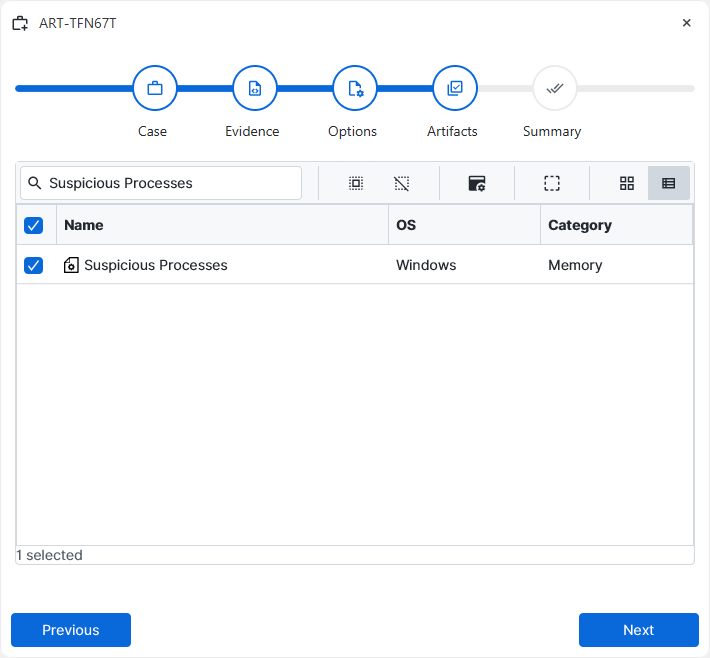
After you have created your case and added evidence for the
investigation, at the Artifact Selection phase, you can select the
Memory Suspicious Processes artifact parser:
×
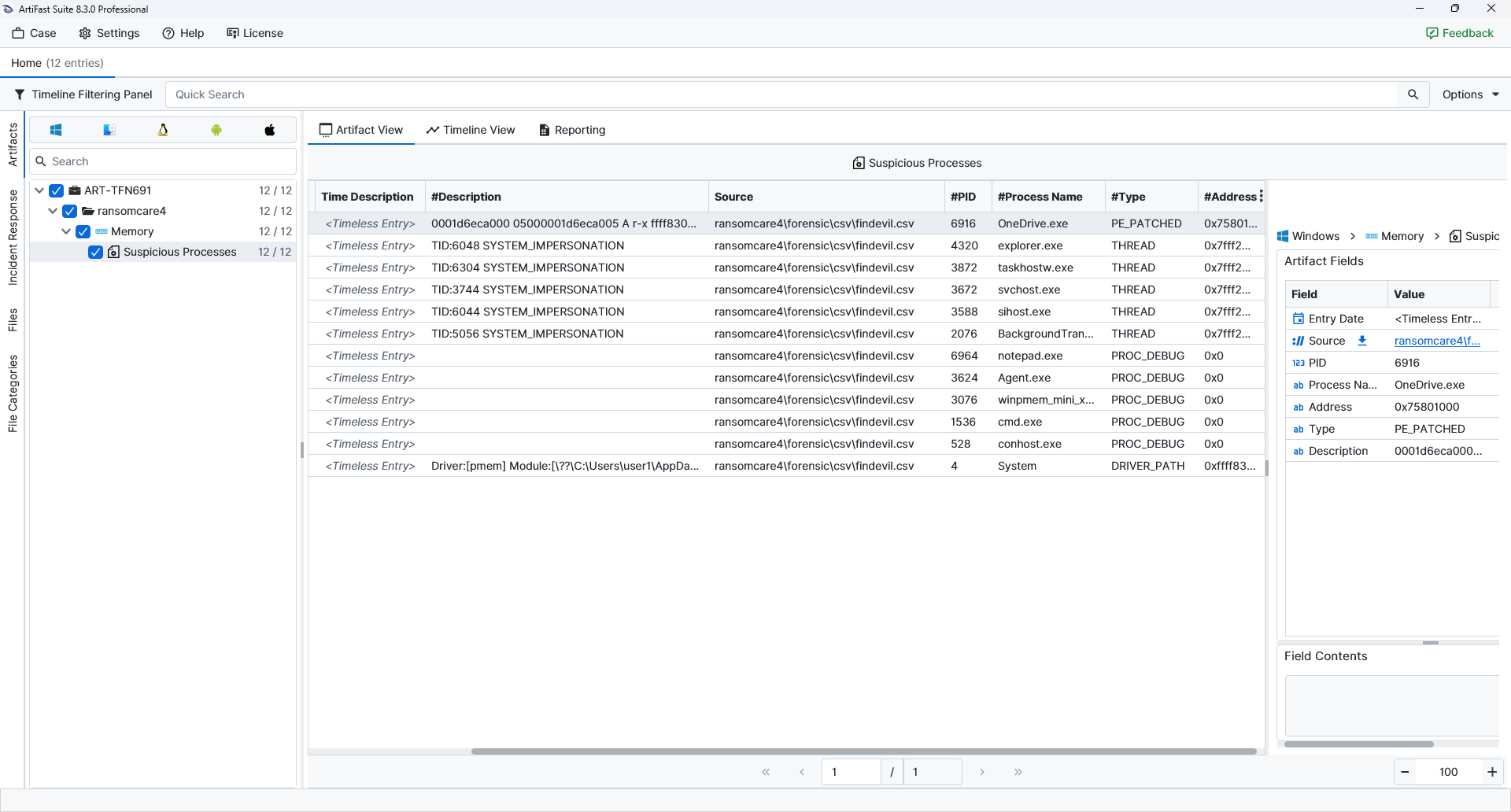
Once ArtiFast parsers plugins complete processing the artifact for analysis, it can be reviewed via “Artifact View” or “Timeline View,” with indexing, filtering, and searching capabilities. Below is a detailed description of the Memory Suspicious Processes artifact in ArtiFast.
Memory Suspicious Processes
- PID: The process identifier of the suspicious process.
- Process Name: The name of the process that was flagged as suspicious.
- Address: The memory address associated with the suspicious process finding.
- Type: The suspicious condition identified in memory.
- Description: Additional technical details about the suspicious finding.
For more information or suggestions please contact: ali.tora@forensafe.com
